
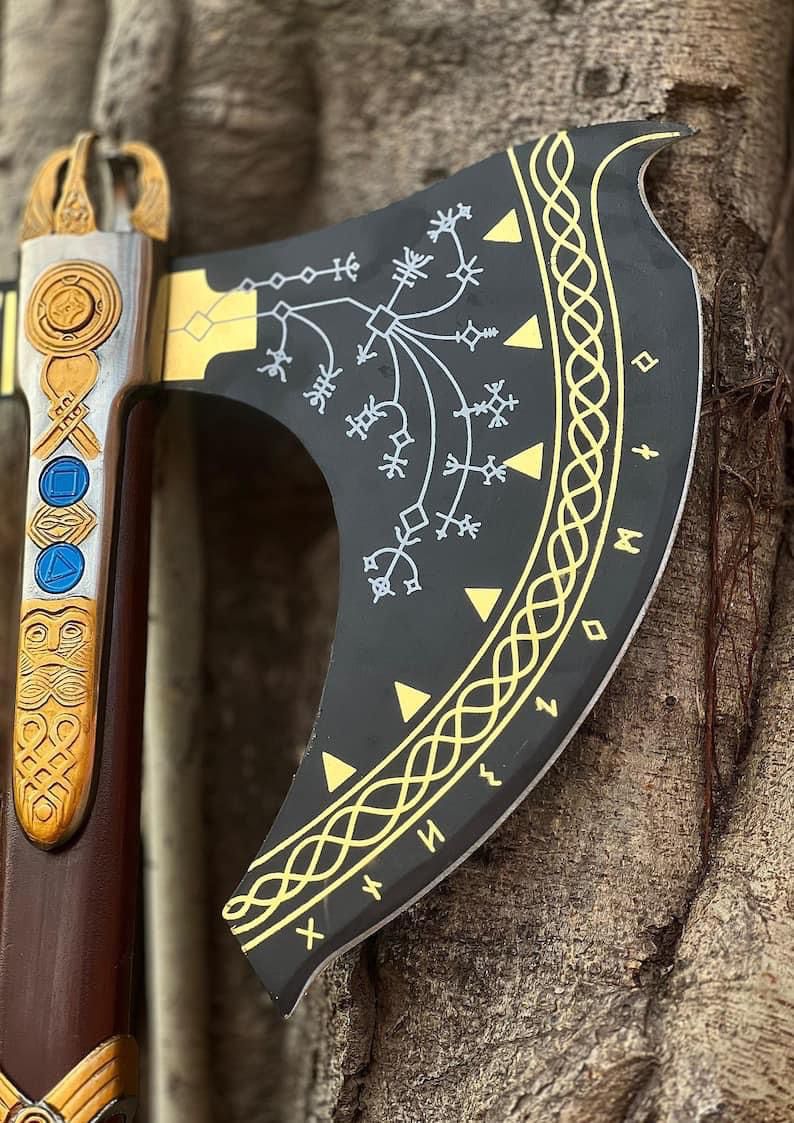
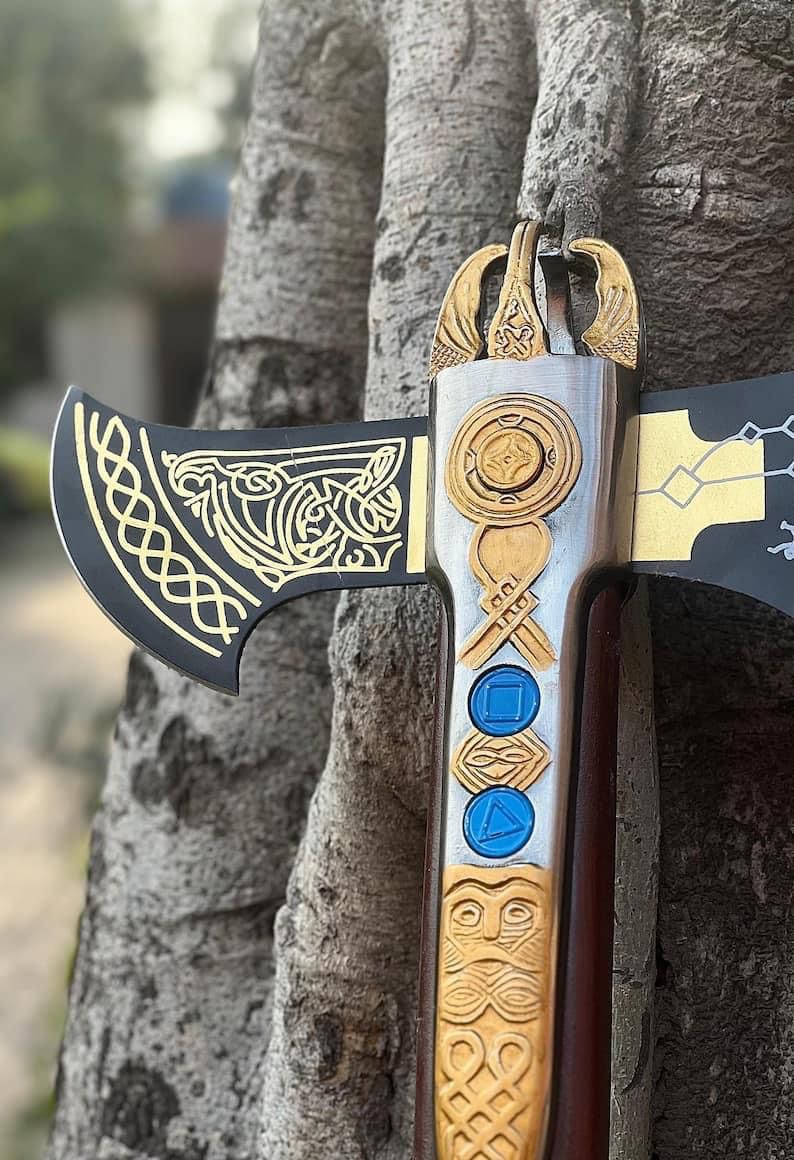
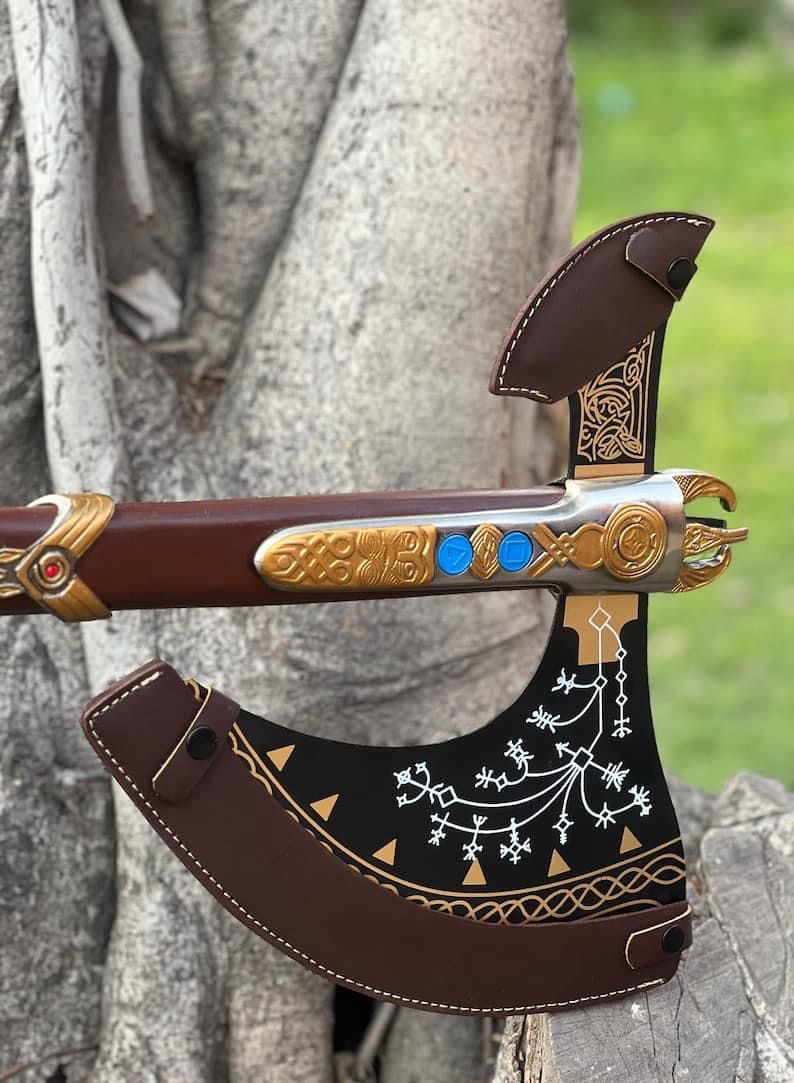


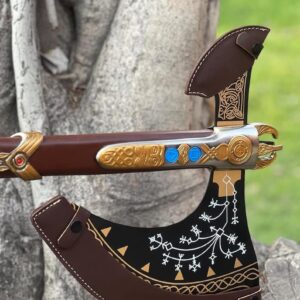
Viking Big Axe (Dane Axe / Bearded Axe) – Description
Name: Dane Axe / Viking Long Axe
Origin: Scandinavia (circa 8th–11th century)
Type: Two-handed battle axe
Length: Typically 4–6 feet (1.2–1.8 meters)
Head Material: Iron or steel
Shaft Material: Ash or other hardwood
Weight: 1.5–3 pounds (0.7–1.4 kg), though larger ceremonial versions could be heavier
Design Features:
-
Axe Head:
-
Broad, thin, and crescent-shaped blade, often with a cutting edge up to 12 inches (30 cm) wide.
-
Many had a distinct “beard”—a lower extension of the blade that increases cutting area while reducing weight.
-
The beard also allowed the axe to hook shields or limbs during combat.
-
-
Shaft:
-
Long wooden haft designed for two-handed use, providing reach and leverage.
-
Often slightly curved for better control and balance.
-
Sometimes wrapped with leather for grip or reinforced with metal bands near the head.
-
-
Construction:
-
Despite their size, Viking big axes were surprisingly light and fast, designed for swift, powerful blows.
-
Axe heads were often forged thin to reduce weight without compromising cutting power.
-
Use in Battle:
-
Wielded by elite Viking warriors (such as huscarls and berserkers).
-
Capable of devastating blows that could split helmets and shields.
-
The long reach made it ideal in open combat, especially in shield wall formations or duels.
-
Could be used to hook enemies’ weapons or shields and pull them off balance.
Cultural and Historical Significance:
-
Seen as a symbol of status and martial prowess.
-
Frequently depicted in Norse art and mentioned in sagas.
-
The Dane axe was later adopted by other European warriors, including the Anglo-Saxons and Normans.
Related products
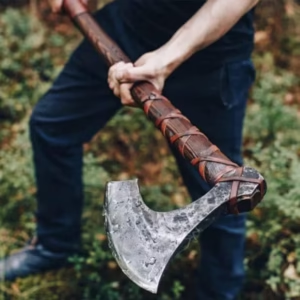







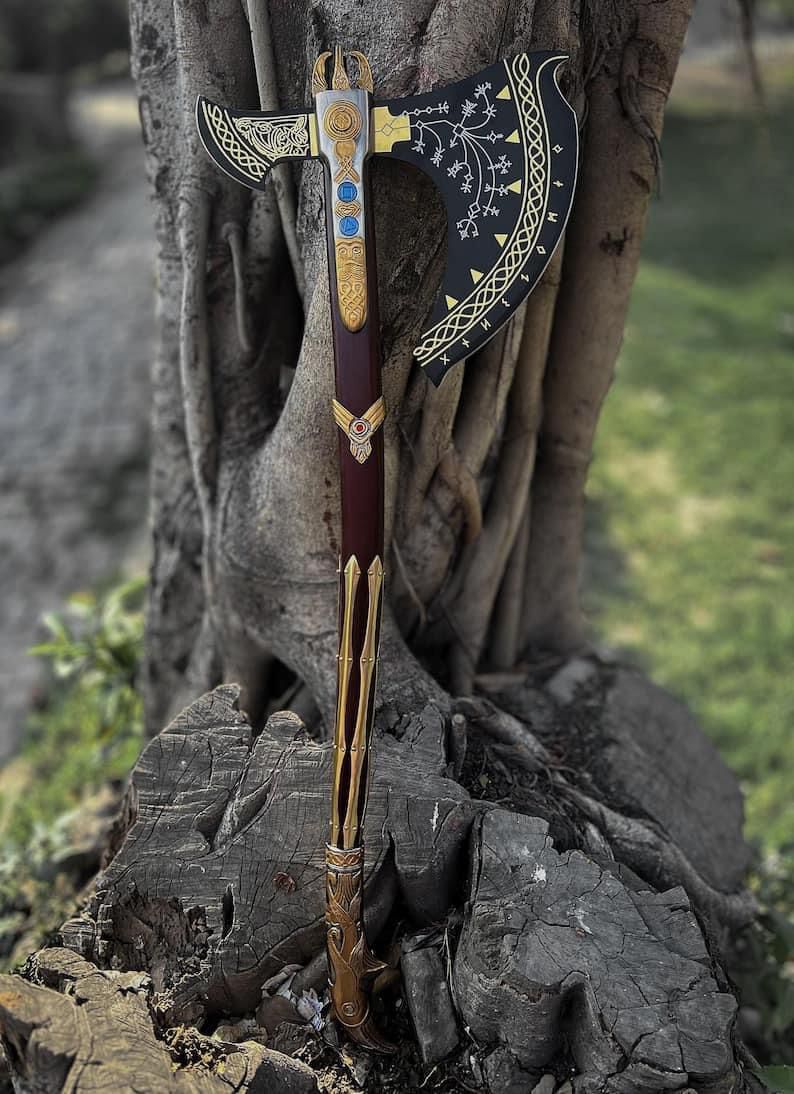 Viking big axe beautiful dane ...