
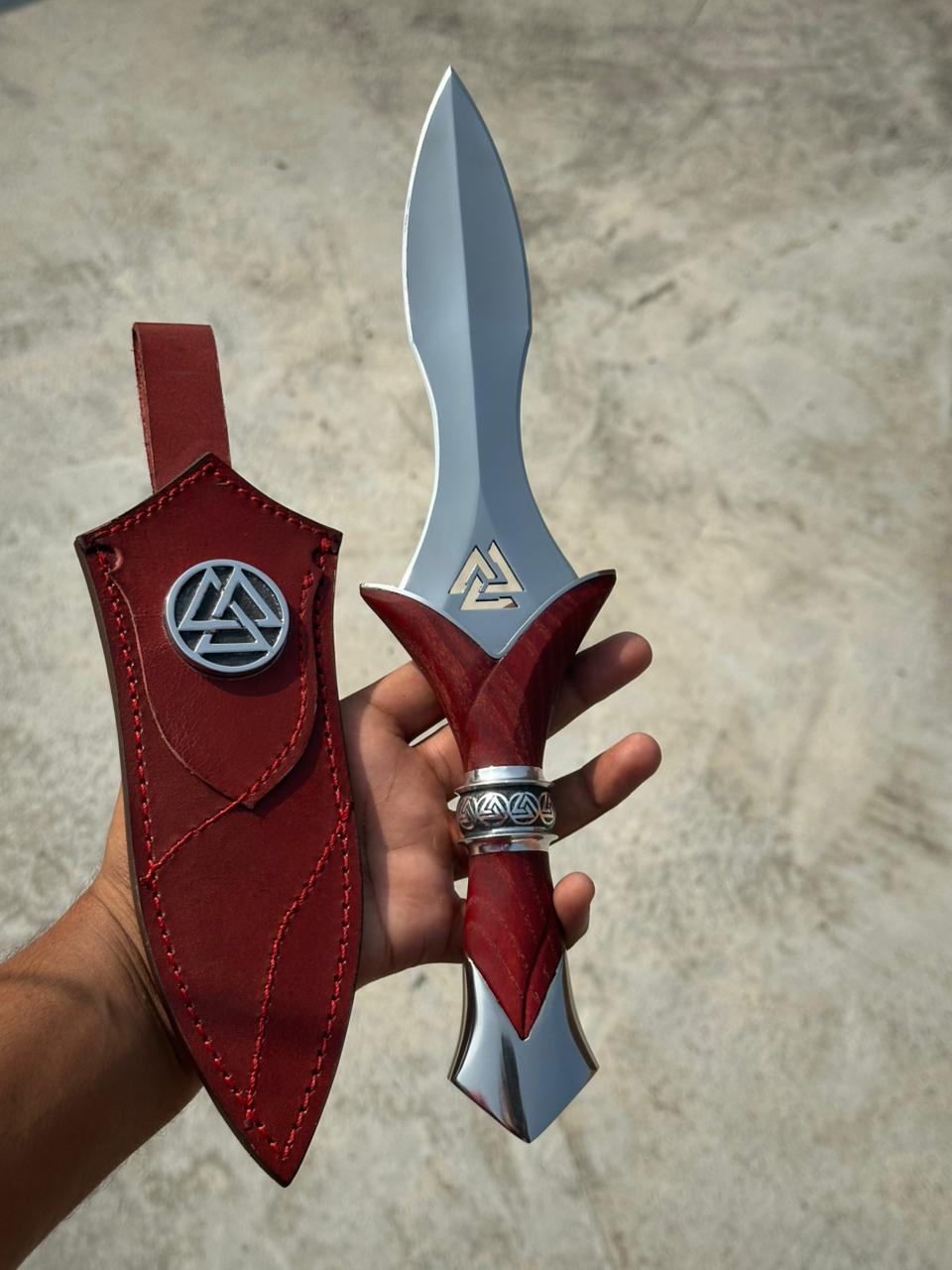


-
Blade: Single-edged, typically straight or with a very shallow curve toward the tip. Blade length varied widely but commonly 10–25 cm (4–10 in) for personal knives. Thicker spine near the handle tapering to a sharp edge.
-
Cross-section: Flat or slightly lenticular; many blades show a simple bevel (one or two) rather than complex geometry.
-
Point: Often a robust, utilitarian point suitable for piercing and general cutting.
-
Guard: Most small Viking knives lack a pronounced crossguard; some later or wealthier examples have minimal guards or widened ricassos.
-
Fuller: Not a prominent feature on small utility knives (more common on larger blades/swords).
Construction & materials
-
Steel/iron: Early knives were forged from wrought iron with higher-carbon steel used for the edge, sometimes produced by pattern-welding or simple forge-welding techniques. By the later Viking Age, more homogenous steel edges were available where resources permitted.
-
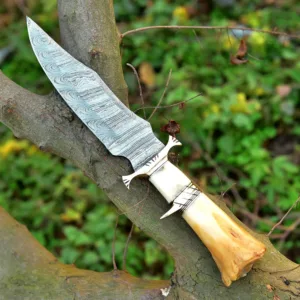
Tang & handle: Short tang (hidden or peened) or slab tang fixed into organic handles. Handles commonly made from antler, bone, wood, or horn; wealthier examples used carved or inlaid decoration.
-
Sheath: Leather sheaths were typical, often with fiber or wooden cores; wealthier owners might have leather with metal fittings or decorative stitching.
Decoration & find-variability
-
Decoration ranges from plain, purely functional knives to finely decorated examples with engraving, inlaid silver/fish-scale patterns on the hilt, or carved bone/antler handles. Regional styles vary across Scandinavia and Viking trade networks.

Related products




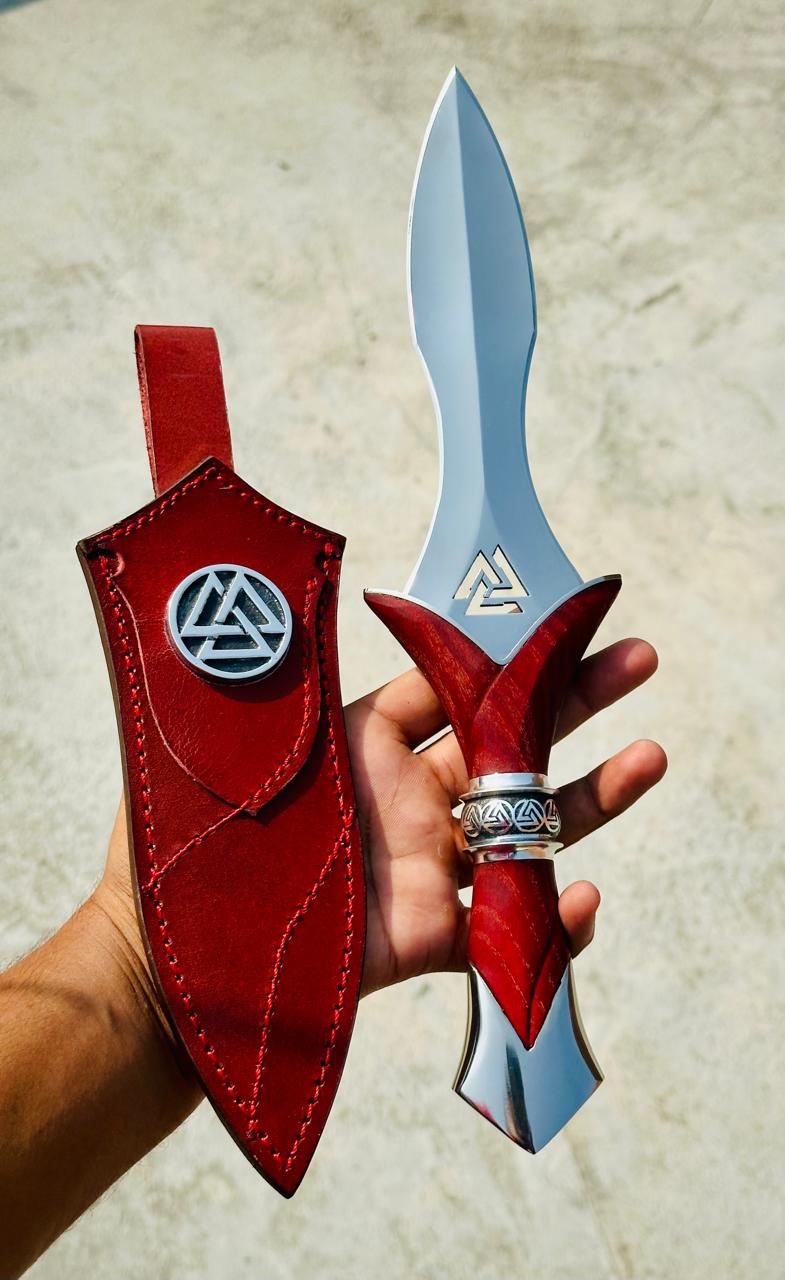 Viking Beauty Red Knife